
Poland Residence Permit System Changed in 2026: What is the MOS System?
Since 27 April 2026, MOS generally enables electronic filing for temporary, permanent and EULT applications; scope, exceptions, signature and later personal appearance depend on the procedure.
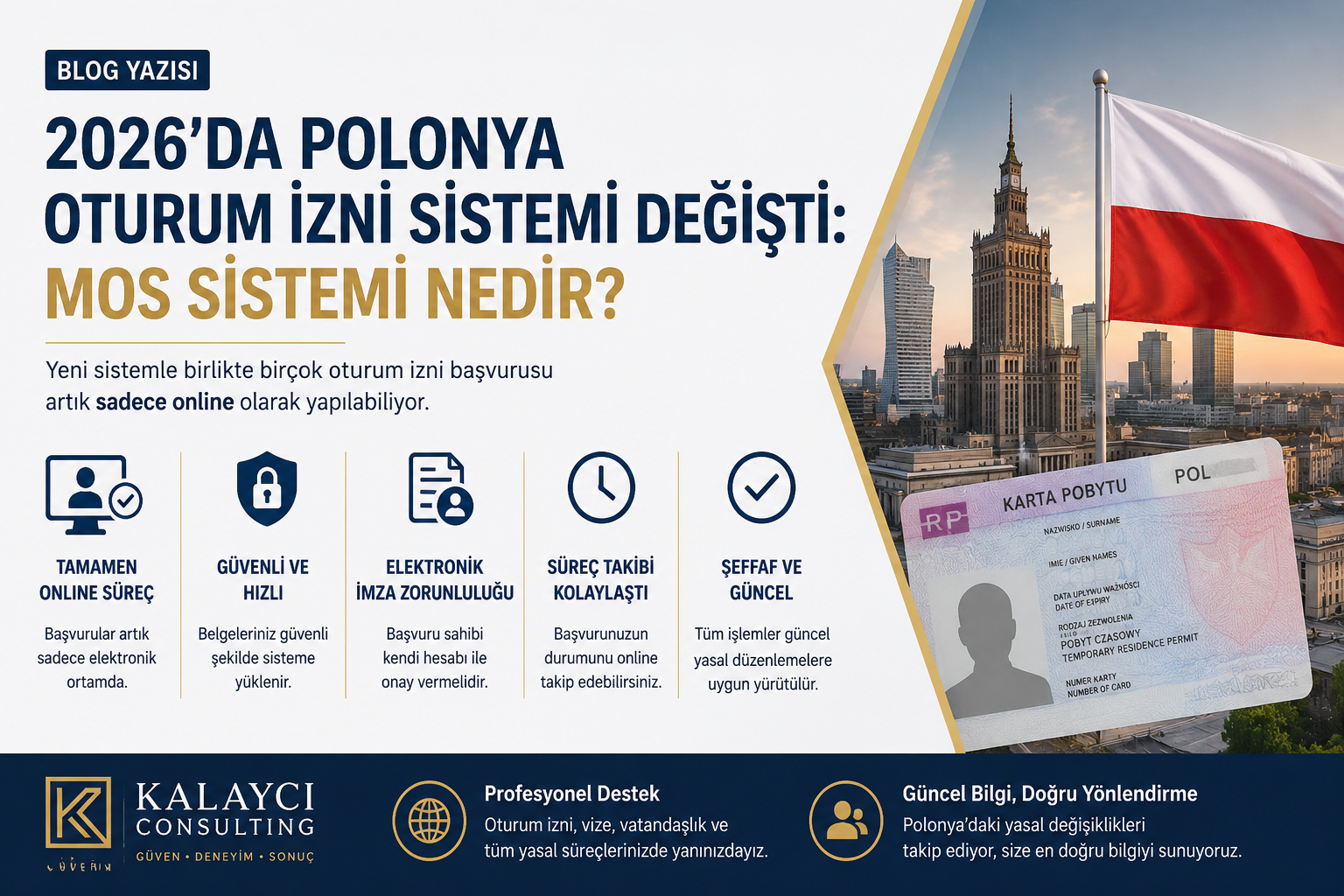
Update — legal status as of 22 August 2026: Applications for temporary residence, permanent residence and EULT have been filed electronically through MOS since 27 April 2026; procedure-specific statutory exceptions may apply to temporary residence. For paper applications covered by the change, receipt by the authority before 27 April, rather than merely posting, is relevant. Electronic filing does not remove later personal identity and passport verification, fingerprints, signature specimen or other formalities.
Both new applicants and existing applicants now face a completely different process. From 2026, many applications for residence permits in Poland can only be submitted online.
The name of this new system is: MOS (Moduł Obsługi Spraw).
Today, many people:
- how to submit an application,
- what documents are required,
- how the system works,
- why their application was rejected
exactly.
In this article, we explain the new system in simple terms.
What is the MOS System?
MOS is the official system for filing residence applications electronically. From 27 April 2026, applications for temporary residence, permanent residence and EULT are generally filed through MOS; procedure-specific statutory exceptions may apply to temporary residence. A covered paper application must reach the authority before system launch; merely posting it is insufficient.
What is the most significant change?
The application is completed electronically, attachments are uploaded, and it is signed with a trusted profile, qualified electronic signature or, where applicable, a personal signature. Secure login and signature belong to the applicant or authorised representative. A UPO is issued after submission, but the authority may require personal identity and passport verification, fingerprints, a signature specimen and other formalities.
Common Mistakes
The most common issues we encounter in applications:
Incomplete financial documents
Insufficient funds in the bank account or missing income documents.
Application for the wrong purpose
For example:
- applying as a student but no longer being an active student,
- a change in employment status,
- failure to update the application following marriage.
Incomplete university documents
For student applications:
- letter of acceptance,
- attendance record,
- term-time achievement certificates
are very important.
What happens if the application is rejected?
A rejection decision does not always mean the process is over.
In many cases:
- an appeal,
- supplementing missing documents,
- a change of purpose,
- submission of new legal grounds
may be possible.
However, it is essential not to miss the deadlines.
Why is Professional Support Important?
The new system involves technical and legal details. Even a minor error:
- lead to delays in the process,
- the application not being processed,
- a rejection decision
.
For this reason, ensuring the file is prepared correctly before submission is of the utmost importance.
How Can Kalaycı Consulting Help?
We assist our clients with:
- residence permit applications,
- MOS system support,
- analysis of missing documents,
- appeal processes,
- citizenship and legal procedures
We provide support in these areas.
We will continue to regularly share updates on the latest legal changes in Poland.
Legal Basis and Official Sources
- Uruchomienie systemu MOS — 27 kwietnia 2026 r. — Urząd do Spraw Cudzoziemców
- Informacja o systemie MOS — podpis i dalsze formalności — Urząd do Spraw Cudzoziemców