
An INPOL “In Progress” Status May Not Mean the Case Is Still Pending: A Decision Discovered 5 Months Later
Polonya’da oturum izni başvurusu yaptıysanız muhtemelen INPOL hesabınızı düzenli olarak kontrol ediyorsunuz. Başvurunun durumunda “In Progress” yazdığını gördüğünüzde doğal olarak dosyanızın hâlâ incelendiğini düşünüyorsunuz. Peki ya gerçekte karar aylar önce verilmişse?
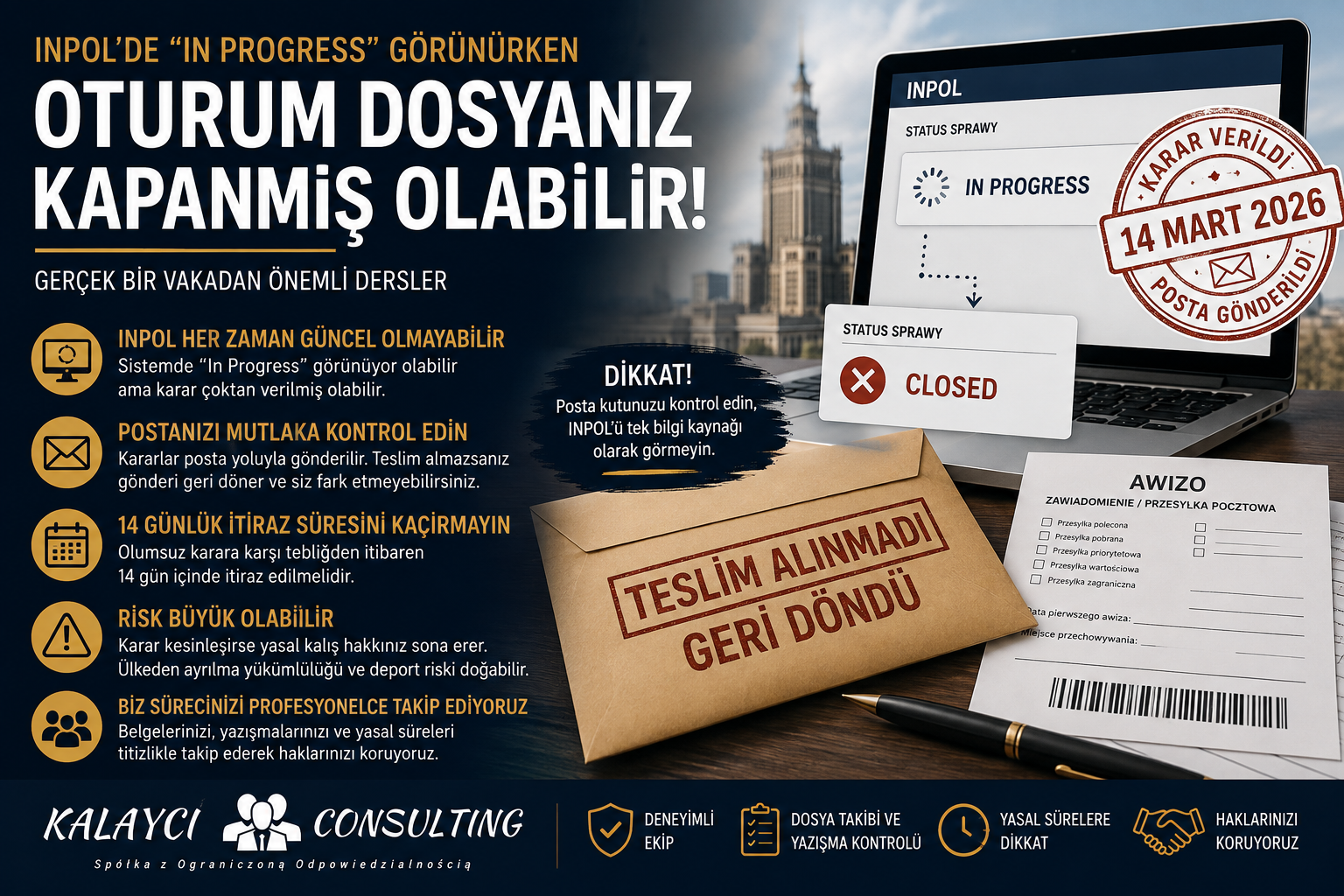
Update — 24 August 2026: inPOL is useful for tracking a case and viewing documents, but an official deadline does not begin merely because an entry appears in the portal. According to the Mazowieckie Voivodeship Office, correspondence is also served through an official channel and the period is calculated from the relevant service. The ordinary appeal period for a residence decision is generally 14 days from service.
Polonya’da oturum izni başvurusu yaptıysanız muhtemelen INPOL hesabınızı düzenli olarak kontrol ediyorsunuz.
Başvurunun durumunda “In Progress” yazdığını gördüğünüzde doğal olarak dosyanızın hâlâ incelendiğini düşünüyorsunuz.
Peki ya gerçekte karar aylar önce verilmişse?
Peki karar adresinize gönderilmiş, teslim alınamadığı için yabancılar dairesine geri dönmüş ancak INPOL hesabınızda bunların hiçbirini görmemişseniz?
Yakın zamanda karşılaştığımız gerçek bir dosya, oturum işlemlerinde yalnızca INPOL sistemini takip etmenin neden yeterli olmayabileceğini çok çarpıcı biçimde gösterdi.
Bu yazıyı özellikle Polonya’da karta pobytu, öğrenci oturumu, çalışan oturumu, aile birleşimi veya başka bir oturum izni başvurusu devam eden herkesin okumasını tavsiye ediyoruz.
Gerçek bir olay: INPOL’de dosya hâlâ “In Progress” görünüyordu
Yakın zamanda bir yabancı bizimle iletişime geçti.
Oturum başvurusu devam ediyordu ve kendisi INPOL hesabını düzenli olarak kontrol ettiğini söyledi.
Sistemde dosyanın statüsü sürekli:
“In Progress”
olarak görünüyordu.
Yani başvuru sahibinin gördüğü tabloya göre dosya hâlâ devam ediyordu.
Her gün hesabına girip kontrol etmesine rağmen:
- “Decision signed”,
- karar verildiğine ilişkin açık bir bildirim,
- kararın gönderildiğine ilişkin anlaşılır bir güncelleme
görmediğini belirtti.
Ta ki bir gün dosyanın durumunun doğrudan:
“Closed”
olarak değiştiğini fark edene kadar.
Doğal olarak endişelenerek bizimle iletişime geçti.
Yabancılar Dairesine Gittiğimizde Gerçek Ortaya Çıktı
Dosyanın durumunu öğrenmek amacıyla yabancılar dairesine giderek konuyu araştırdık.
Ve ortaya oldukça ciddi bir durum çıktı.
Bize verilen bilgiye göre:
Karar 14 Mart 2026 tarihinde verilmişti.
Karar, başvuru sahibinin dosyada bulunan adresine posta yoluyla gönderilmişti.
Ancak gönderi teslim alınmamış ve daha sonra yabancılar dairesine geri dönmüştü.
Biz bütün bunları yaklaşık 5 ay sonra öğreniyorduk.
Başvuru sahibi ise bu süre boyunca INPOL hesabında dosyasını takip ettiğini ve başvurusunun hâlâ devam ettiğini düşündüğünü söylüyordu.
Yabancılar dairesinde sistemde bir güncelleme veya teknik aksaklık yaşanmış olabileceği ifade edildi.
Sonuç ise değişmiyordu:
Karar aylar önce verilmişti.
“Ama Ben INPOL’ü Her Gün Kontrol Ettim”
İşte bu dosyanın bize öğrettiği en önemli şey tam olarak budur.
INPOL çok faydalı bir sistemdir.
Dosyanızın durumunu kontrol edebilir, bazı bildirimleri görebilir ve başvurunuzdaki gelişmeleri takip edebilirsiniz.
Ancak:
INPOL hesabında gördüğünüz statüyü tek bilgi kaynağınız olarak kabul etmek ciddi bir hata olabilir.
Bir sistemin güncellenmemesi, geç güncellenmesi veya teknik bir problem yaşanması, idari işlemin gerçekte yapılmadığı anlamına gelmez.
Başka bir ifadeyle:
INPOL’de “In Progress” görmeniz, hukuken dosyanızda hiçbir karar verilmediğinin garantisi değildir.
Peki Karar Postayla Geldiyse?
Polonya’daki idari işlemlerde doręczenie, yani resmî tebligat, son derece önemlidir.
Oturum izni hakkında olumlu veya olumsuz bir karar verildiğinde kararın tarafınıza usulüne uygun şekilde tebliğ edilmesi gerekir.
Buradaki en büyük yanlış anlaşılmalardan biri şudur:
“Postayı fiziksel olarak elime almadıysam karar bana tebliğ edilmiş sayılmaz.”
Her durumda böyle değildir.
Polonya idari hukukundaki tebligat kuralları nedeniyle, belirli şartlar altında gönderiyi fiilen elinize almamış olsanız dahi hukuken tebliğ edilmiş kabul edilmeniz mümkün olabilir.
Bu nedenle posta kutusuna bırakılan awizo son derece önemlidir.
Posta Kutunuzu Kontrol Etmemek Küçük Bir Hata Değildir
Oturum başvurunuz devam ediyorsa posta kutunuzu düzenli olarak kontrol etmek başvurunun en önemli parçalarından biridir.
Çünkü yabancılar dairesinden gelen bir mektup:
- eksik evrak talebi,
- ifade veya açıklama talebi,
- ek belge talebi,
- duruşma veya işlem bildirimi,
- olumlu karar,
- olumsuz karar
olabilir.
Ve bazı yazılarda cevap vermeniz için yalnızca birkaç gününüz bulunabilir.
Bu nedenle:
“INPOL’e baktım, orada hiçbir şey yoktu.”
demek sizi her zaman hukuki sonuçlardan korumayabilir.
Olumsuz Karara İtiraz İçin Ne Kadar Süreniz Var?
Wojewoda tarafından verilen oturum kararına karşı genel olarak kararın tebliğinden itibaren 14 gün içinde Szef Urzędu do Spraw Cudzoziemców’a itiraz edilebilir.
Bu süre son derece önemlidir.
Örneğin kararınız olumsuzsa ve zamanında itiraz ederseniz dosyanız ikinci derece makam tarafından yeniden incelenebilir.
Ancak karar size hukuken tebliğ edilmiş kabul edilmiş ve siz 14 günlük süre içerisinde hiçbir işlem yapmamışsanız karar kesinleşebilir.
İşte posta takibinin önemi burada ortaya çıkıyor.
“Kararı Görmedim, Sonradan Öğrendim” Dersem Ne Olur?
Burada her şey tamamen bitmiş olmayabilir.
Polonya idari hukukunda bazı durumlarda kaçırılmış bir sürenin geri getirilmesi için:
przywrócenie terminu
talep edilebilir.
Ancak bunun için başvuru sahibinin süreyi kendi kusuru olmaksızın kaçırdığını gösterebilmesi gerekir.
Ayrıca engelin ortadan kalkmasından itibaren çok kısa bir süre içerisinde harekete geçilmesi gerekir.
Dolayısıyla:
“Kararı beş ay sonra öğrendim, şimdi normal şekilde itiraz ederim.”
demek doğru değildir.
Öncelikle tebligatın nasıl yapıldığı, hangi adrese gönderildiği, awizo işlemlerinin doğru yapılıp yapılmadığı ve kişinin neden karardan haberdar olmadığı incelenmelidir.
Bu aşamada artık normal bir oturum takibinden değil, çok daha ciddi bir hukuki problemden bahsediyoruz.
Adresiniz Güncel Değilse Risk Daha da Büyük
Oturum başvurusu devam ederken adres değiştirdiyseniz ve bunu ilgili makama bildirmediyseniz ciddi sorun yaşayabilirsiniz.
Örneğin:
Eski adresinizden taşındınız.
Yeni evinize geçtiniz.
INPOL’ü kontrol etmeye devam ettiğiniz için her şeyin yolunda olduğunu düşünüyorsunuz.
Ancak yabancılar dairesi kararınızı eski adresinize gönderiyor.
Siz doğal olarak o posta kutusunu artık kontrol etmiyorsunuz.
Aylar sonra dosyanızın kapandığını öğreniyorsunuz.
Bu nedenle oturum işlemlerinde adres değişikliğinin bildirilmesi basit bir formalite değildir.
En Tehlikeli Senaryo: Olumsuz Kararın Kesinleşmesi
Şimdi konunun en ciddi kısmına gelelim.
Diyelim ki yabancının Polonya’daki yasal kalışı devam eden oturum başvurusuna dayanıyordu.
Başvuru zamanında yapılmıştı ve gerekli formaliteler tamamlanmıştı.
Bu durumda başvuru süreci devam ederken kişinin Polonya’daki kalışı belirli şartlarla yasal kabul edilebilir.
Ancak olumsuz karar kesinleştiğinde bu dayanak sonsuza kadar devam etmez.
Başka bir yasal kalış dayanağınız bulunmuyorsa, olumsuz karar kesinleştikten sonra Polonya’dan ayrılma yükümlülüğü gündeme gelebilir.
Resmî yabancılar portalı MOS da, oturum izni verilmez ve kişinin başka bir kalış hakkı bulunmazsa, süresinde itiraz edilmemesi durumunda karar kesinleştikten sonra 30 gün içinde Polonya’dan ayrılması gerektiğini açıkça belirtmektedir.
Bu yükümlülüğün yerine getirilmemesi ise daha ciddi sonuçlara ve zobowiązanie do powrotu, yani geri dönüş yükümlülüğü prosedürüne yol açabilir.
“Deport Edilir Miyim?”
Her kaçırılan posta otomatik olarak deport anlamına gelmez.
Bunu özellikle belirtmek gerekir.
Ancak olumsuz karar kesinleşmiş, kişinin başka bir yasal kalış dayanağı bulunmuyor ve buna rağmen Polonya’da kalmaya devam ediyorsa durum ciddi hale gelebilir.
Böyle bir durumda:
- illegal kalış problemi,
- geri dönüş kararı,
- gelecekteki vize başvurularında sorun,
- Polonya’ya veya Schengen Bölgesi’ne yeniden giriş konusunda problemler
gündeme gelebilir.
Sonucun ne olacağı her dosyada ayrı değerlendirilmelidir.
Bizim Karşılaştığımız Dosyada Şimdi Ne Olacak?
Bu kişinin dosyasında artık ilk günkü gibi basit bir oturum başvurusu takibinden bahsetmiyoruz.
Kararın ne şekilde tebliğ edildiğinin ve sürenin geri getirilmesi için herhangi bir hukuki imkân bulunup bulunmadığının ayrıca değerlendirilmesi gerekiyor.
Mevcut durumda kişinin Polonya’daki yasal statüsü de ayrıca incelenmek zorunda.
Alternatif senaryolardan biri kişinin Türkiye’ye dönmesi ve Polonya’ya yeniden gelebilmek için vize başvurusu yapması olabilir.
Ancak geçmişte oluşmuş olabilecek illegal kalış veya geri dönüş prosedürü, gelecekteki işlemleri de etkileyebilir.
İşte aylar önce posta kutusunda görülmemiş olabilecek küçücük bir kâğıdın sonucu bu kadar ciddi olabilir.
“Ama Burada Benim Suçum Ne?”
Bu soruyu sormakta haklı olabilirsiniz.
Çünkü olayın başvuru sahibinin gözünden nasıl göründüğüne bakalım:
INPOL’e giriyor.
In Progress.
Ertesi gün tekrar bakıyor.
In Progress.
Bir hafta sonra tekrar:
In Progress.
Posta kutusunu kontrol ettiğini söylüyor.
Kararı görmüyor.
Sistemde “Decision signed” görmüyor.
Aylar sonra:
Closed.
Ve yabancılar dairesine gittiğinde kararın aslında beş ay önce verildiğini öğreniyor.
Böyle bir durumda kişinin:
“Ben bunu nasıl bilebilirdim?”
diye sorması son derece anlaşılır.
Ancak idari işlemlerde maalesef pratik gerçeklik ile kişinin haklılık duygusu her zaman aynı sonucu doğurmuyor.
Postacı awizo bırakmadıysa bunu sonradan ispatlamak gerekebilir.
INPOL güncellenmediyse bunun hukuki sonucu ayrıca değerlendirilmelidir.
Memurun sisteme bilgi girmemiş olması, kaçırılan itiraz süresini kendiliğinden geri getirmeyebilir.
Sonuçta hukuki sonuçlarla karşılaşan kişi çoğu zaman başvuru sahibidir.
İşte Profesyonel Dosya Takibi Neden Önemli?
Bazen danışmanlık hizmeti yalnızca:
“Form doldurmak”
olarak görülüyor.
Oysa özellikle Polonya oturum işlemlerinde profesyonel temsil bundan çok daha fazlasıdır.
Bizim görevimiz yalnızca başvuruyu hazırlayıp göndermek değildir.
Dosya devam ederken:
- resmî yazışmaları takip ederiz,
- eksik evrak taleplerini kontrol ederiz,
- belgeleri güncel tutarız,
- dosyadaki olağandışı durumları araştırırız,
- gerekli olduğunda yabancılar dairesiyle iletişim kurarız,
- karar çıktığında hukuki süreleri takip ederiz,
- olumsuz kararlarda itiraz süresinin kaçırılmaması için hızlı hareket ederiz.
En önemlisi de dosyada normal olmayan bir durum olduğunda bunu fark etmeye çalışırız.
Vekiliniz Varsa Tebligat Konusu Daha Kontrollü Hale Gelebilir
Dosyada usulüne uygun şekilde atanmış bir vekilin bulunması, resmî yazışmaların profesyonel olarak takip edilmesi açısından önemli bir avantaj sağlayabilir.
Çünkü oturum işlemlerinde mesele yalnızca:
“Kararım çıktı mı?”
sorusundan ibaret değildir.
Bazen asıl önemli soru:
“Bugün bize cevap vermemiz gereken bir yazı tebliğ edildi mi?”
olabilir.
Bir günlük gecikme önemsiz görünebilir.
Ancak bazı hukuki sürelerde birkaç gün bile bütün dosyanın geleceğini değiştirebilir.
Oturum Başvurunuz Devam Ediyorsa Bunları Mutlaka Yapın
Dosyanızı kendiniz takip ediyorsanız şu konuları kesinlikle ihmal etmeyin:
1. INPOL hesabınızı düzenli kontrol edin
Ama INPOL’ü tek bilgi kaynağınız olarak görmeyin.
2. Posta kutunuzu sık sık kontrol edin
Özellikle üzerinde isminizin doğru şekilde yazılı olduğundan emin olun.
3. Awizo gördüğünüzde beklemeyin
Postaneye mümkün olan en kısa sürede gidin.
4. Adres değiştirdiğinizde hemen bildirin
“INPOL’de adresim var” diye düşünerek resmi bildirim yükümlülüklerini ihmal etmeyin.
5. Uzun süre hiçbir hareket yoksa dosyanızı kontrol ettirin
Özellikle beklenmedik şekilde statünüz Closed olursa bunu normal kabul etmeyin.
6. Karar çıktığını öğrendiğinizde aynı gün harekete geçin
Olumsuz bir karar söz konusuysa itiraz ve olası przywrócenie terminu açısından her gün önemlidir.
INPOL Bir Takip Aracıdır; Hukuki Güvence Değildir
Bu gerçek olaydan çıkarılması gereken en önemli ders budur:
Dijital sistemde gördüğünüz bilgiye yüzde 100 güvenerek hareket etmeyin.
INPOL önemli ve faydalı bir araçtır.
Ancak oturum işleminizin hukuki durumunu belirleyen şey yalnızca ekranda gördüğünüz:
In Progress / Closed
ifadeleri değildir.
Kararın ne zaman verildiği, nasıl tebliğ edildiği, hangi adrese gönderildiği ve hukuken ne zaman kesinleştiği çok daha önemlidir.
“Ben Her Şeyi Takip Ederim” Diyebilirsiniz. Ama Bazen Bu Yetmeyebilir.
Elbette herkes oturum başvurusunu kendisi yapabilir ve dosyasını kendisi takip edebilir.
Ancak bu olay bize bir kez daha gösterdi ki mesele yalnızca form doldurmak değildir.
Bazen problem:
- yanlış bir belge,
- eksik bir imza,
- görülmeyen bir awizo,
- güncellenmeyen bir INPOL statüsü,
- yanlış adrese gönderilen veya teslim alınamayan bir mektup,
- kaçırılan 14 günlük itiraz süresi
olabilir.
Ve bunlardan yalnızca biri bile yıllardır Polonya’da yaşayan bir kişinin hayatını ciddi şekilde etkileyebilir.
Bu Tarz Problemler Yaşanmasın Diye Biz Varız
Kalayci Consulting olarak amacımız yalnızca oturum başvurunuzu hazırlamak değildir.
Dosyanızı başından sonuna kadar takip etmektir.
Çünkü bazen danışmanın en önemli işi yeni bir belge hazırlamak değil, bir şeylerin yolunda gitmediğini zamanında fark etmektir.
Bu vakada kişi yaklaşık beş ay boyunca başvurusunun devam ettiğini düşünüyordu.
Gerçekte ise karar çoktan verilmiş ve posta yabancılar dairesine geri dönmüştü.
Böyle bir durumla karşılaşmanın sonucunda artık basit bir oturum başvurusundan değil;
itiraz süresi, yasal kalış, olası geri dönüş yükümlülüğü ve gelecekteki vize başvuruları gibi çok daha ciddi konulardan bahsediyoruz.
Oturum başvurunuz devam ediyorsa dosyanızı yalnızca INPOL’deki yeşil veya aktif statüye bakarak takip etmeyin.
Postanızı takip edin.
Adresinizi güncel tutun.
Resmî yazışmaları ciddiye alın.
Şüpheli bir durum varsa beklemeyin.
Çünkü oturum işlemlerinde bazen aylarca hiçbir şey olmuyormuş gibi görünür.
Ama hukuki süreler siz fark etmeden çoktan işlemeye başlamış olabilir.
Kalayci Consulting
Polonya’da oturum, vatandaşlık ve yabancılar hukuku süreçlerinde profesyonel dosya takibi.
Bu yazıda anlatılan vaka, yakın zamanda karşılaştığımız gerçek bir olaydan hareketle hazırlanmış; kişinin kimliğini ortaya çıkarabilecek bilgiler paylaşılmamıştır. Yazı genel bilgilendirme amacı taşımaktadır. Her dosyanın hukuki durumu ayrıca değerlendirilmelidir.
Legal Basis and Official Sources
- Najczęściej zadawane pytania — Portal Cudzoziemca inPOL — Mazowiecki Urząd Wojewódzki w Warszawie
- Środki zaskarżenia w postępowaniu pobytowym — Urząd do Spraw Cudzoziemców — MOS