
Are There New Changes on the Way to the Polish Citizenship Act? An Updated Assessment for 2026
New regulations concerning citizenship procedures in Poland have recently come to the fore once again. In particular, the latest statements issued by the Ministry of the Interior are being interpreted as indicating that stricter conditions may be applied to citizenship applications in future.
Legal status — 24 August 2026: This article discusses publicly announced reform proposals, not the citizenship requirements currently in force. An eight-year residence period and citizenship test are among the MSWiA proposals; they are not, by themselves, rules in force. A current application must be assessed under the statutory routes presently applicable.
New regulations concerning citizenship procedures in Poland have recently come to the fore once again. In particular, recent statements made by the Ministry of the Interior are being interpreted as indicating that stricter conditions may be applied to citizenship applications in the future.
Although no new law has yet officially come into force, the statements that have been shared and the draft legislation previously discussed are attracting attention.
In this article:
- the new citizenship requirements under discussion,
- the Ministry of the Interior’s statements,
- the PiS draft bill previously discussed,
- and how potential changes might affect foreign nationals
in general.
The Ministry of the Interior’s Latest Statement
The following statements were included in the post by the Polish Ministry of the Interior:
“Polish citizenship is a privilege and must be earned.”
The statement mentioned certain conditions that are planned to be assessed in the future.
Among the points raised were:
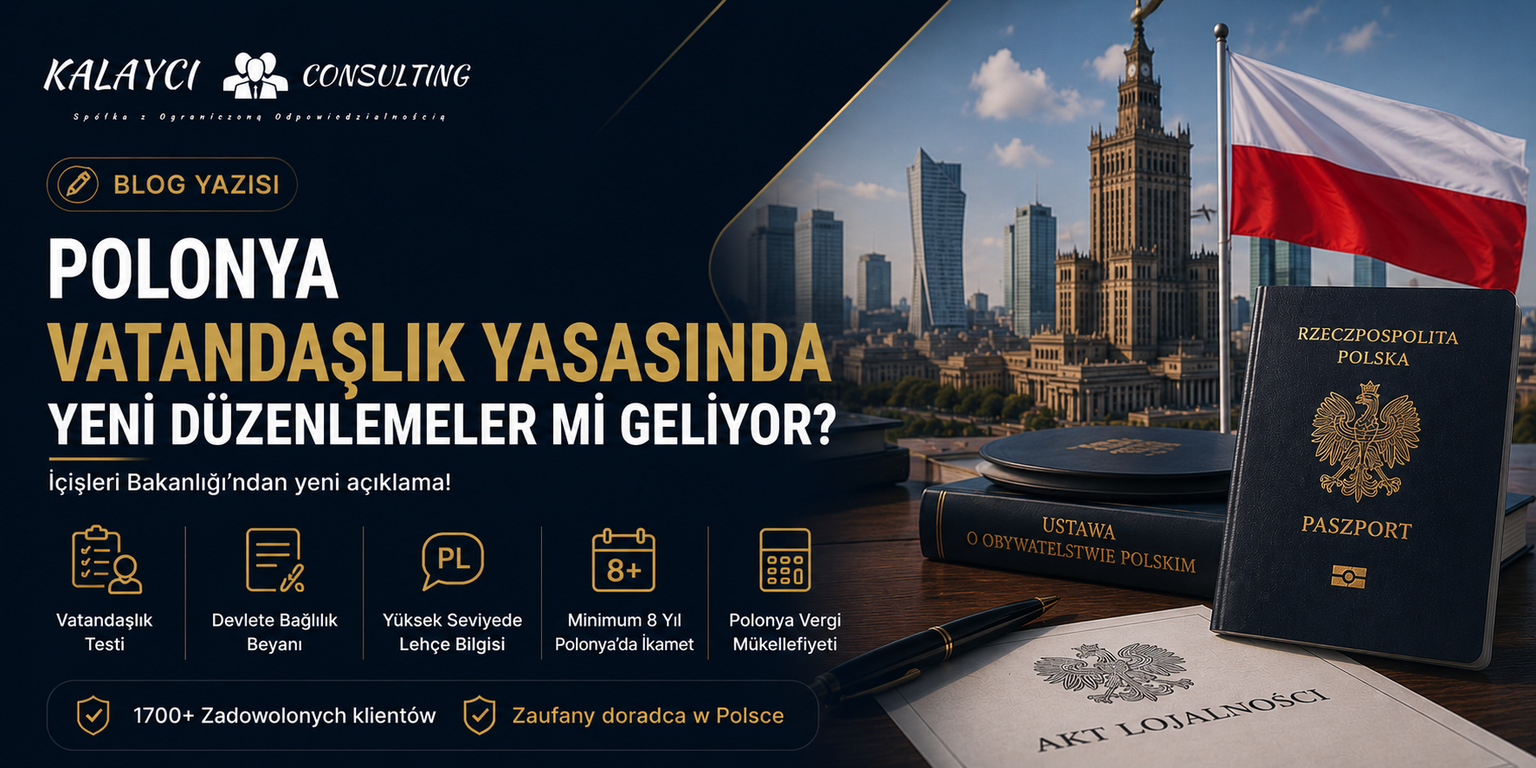
- a citizenship test,
- a requirement to demonstrate knowledge of Polish history and values,
- a declaration of loyalty to the state,
- a high level of proficiency in Polish,
- a minimum of 8 years’ residence in Poland,
- Polish tax liability
were among the criteria included.
This announcement caused quite a stir, particularly amongst foreigners who have been living in Poland for a long time.
Could a Citizenship Test Be Introduced?
One of the most striking points among the shared provisions was the citizenship test.
This test would cover:
- Polish history,
- constitutional values,
- social integration,
- cultural knowledge
are said to be covered.
Similar citizenship tests are already in place in many European countries.
At present, there is no compulsory official citizenship test system in Poland.
Polish Language Requirement May Become Even More Stringent
Under the current system, a certain level of knowledge of Polish is already a requirement in some citizenship procedures.
However, in the latest discussions:
- a higher level of Polish,
- an integration assessment,
- official language proficiency
may be applied more strictly.
This may be a particularly important issue for those who have lived in Poland for a long time but do not actively use the language.
The 8-Year Residence Requirement is Under Discussion
Another point that stood out in the statements was the requirement for a minimum of 8 years’ residence in Poland.
Currently, citizenship procedures depend on the individual’s:
- type of residence permit,
- marital status,
- length of lawful residence,
- and current status
.
Should new regulations come into force, it is possible that some processes may be prolonged.
However, there are currently no official changes in force.
Tax Liability Condition
The Ministry’s statements also addressed the issue of Polish tax liability.
This refers to:
- regular income,
- an economic link to Poland,
- a history of formal employment
may take on greater significance.
This may become particularly significant in the future for those who have worked in other countries for a long time or who declare their income outside Poland.
A Bill Proposed by the PiS Party Had Previously Been on the Agenda
These discussions are not, in fact, emerging for the first time.
A draft bill previously prepared by the PiS party and discussed in the public sphere had also raised the issue of tightening citizenship requirements.
At that time:
- longer residence periods,
- stricter integration requirements,
- security checks,
- language criteria
were among the issues discussed.
However, the draft bill in question had not become law and had not been passed by parliament.
Nevertheless, recent statements suggest that stricter policies regarding citizenship procedures may be on the agenda in the future.
What Should Those Planning to Apply for Citizenship Do at the Moment?
For the time being, the current laws remain in force.
However, those considering citizenship should:
- carefully monitor their legal residence periods,
- improve their Polish language skills,
- keep their tax and official records up to date,
- and ensure that their address and residence procedures are carried out in full
is of great importance.
In particular, due to potential future changes, many people prefer to complete their procedures well in advance.
The Most Common Mistakes Made During the Citizenship Process
The most common problems encountered in applications:
- missing documents,
- incorrect calculation of residence period,
- address issues,
- incomplete tax records,
- failure to follow up on official correspondence,
- issues with Polish-language documents
are common issues.
In particular, failing to keep track of official correspondence can lead to serious consequences.
At Kalaycı Consulting, We Monitor the Process Closely
At Kalaycı Consulting:
- Polish citizenship applications,
- residence permit applications,
- official correspondence,
- the MOS system,
- appeal procedures,
- legal changes
and we continue to keep our clients informed.
We will continue to share any new developments regarding potential changes to citizenship laws in Poland as they arise.
Legal Basis and Official Sources
- Poproś o uznanie za polskiego obywatela — Ministerstwo Spraw Wewnętrznych i Administracji
- Rząd proponuje zmiany w nadawaniu obywatelstwa polskiego — Ministerstwo Spraw Wewnętrznych i Administracji