
What Should Be Considered in Uznanie za Obywatela Polskiego Applications? Can Traffic Fines Create Problems?
A single traffic ticket is not an automatic ground to refuse recognition as a citizen; administrative penalties, criminal convictions and public-order assessment must be distinguished.
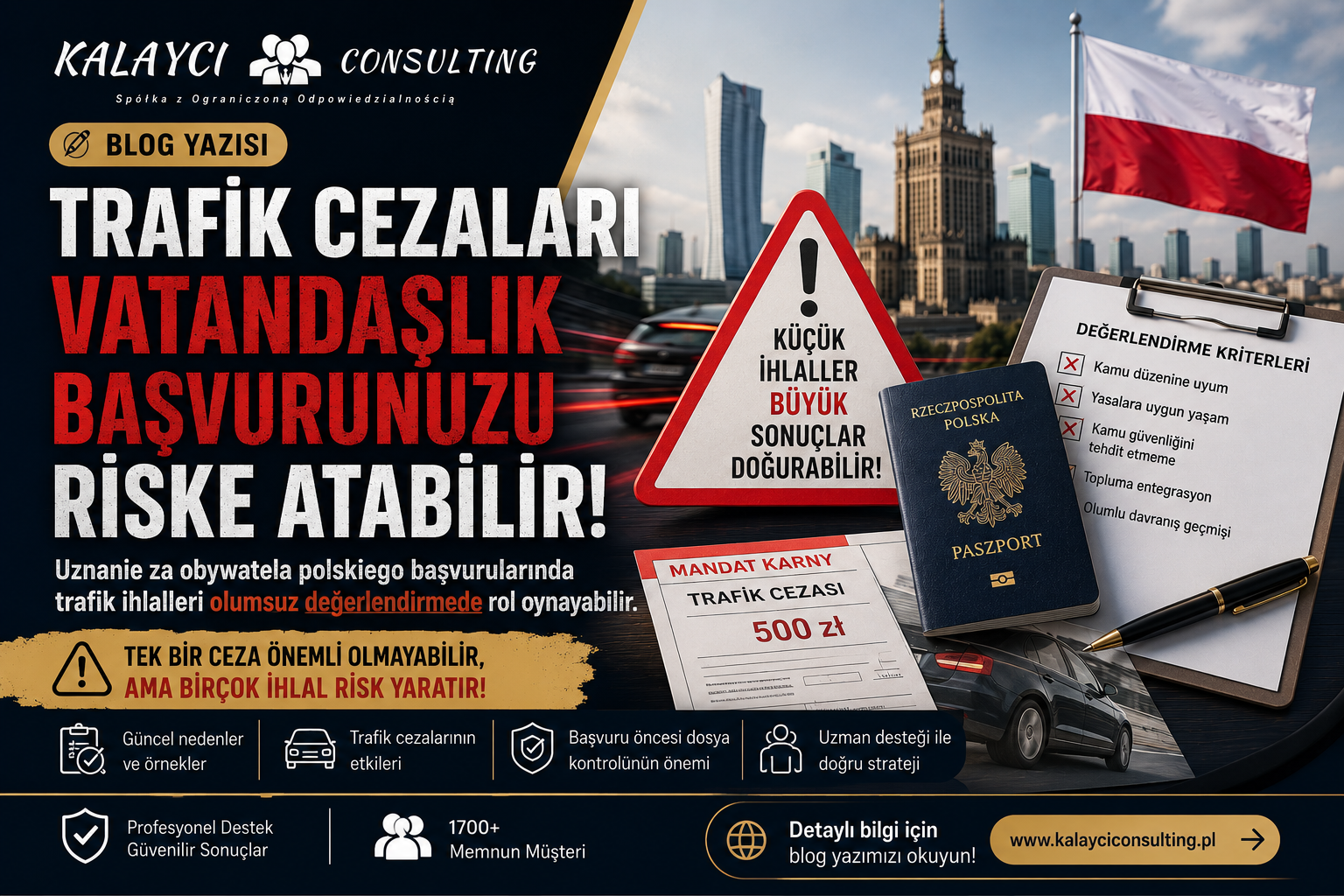
Update — legal status as of 22 August 2026: The requirements for recognition as a Polish citizen depend on the statutory route relied upon. Where required, Polish at a minimum B1 level must be shown by appropriate official evidence. Under Article 31, refusal follows if the applicable conditions are not met or acquisition would threaten national defence or security, or the protection of public safety and public order. A single minor traffic ticket is not listed as an automatic refusal ground; the nature, repetition and seriousness of conduct and other records require an individual assessment.
Many people thinking about applying for Polish citizenship focus only on residence duration and Polish language requirement.
However, especially in applications for uznanie za obywatela polskiego (recognition as a Polish citizen), the process is not limited to just submitting documents.
During the application, authorities can evaluate not only formal conditions but also the applicant's adaptation to life in Poland and public order.
So can traffic fines or certain violations affect the citizenship process?
In this article, we address this important issue.
What Is Uznanie za Obywatela Polskiego?
Recognition as a Polish citizen is the procedure through which a foreign national satisfying one of the statutory routes may be recognised by a decision of the competent voivode. The requirements are not identical for everyone; depending on the route, the relevant residence status, a specified period of lawful and continuous residence, income or a legal title to accommodation may matter.
Where the statute requires it, Polish at a minimum B1 level is shown by an official certificate, a certificate of completing school in Poland or a school abroad where Polish was the language of instruction. Statutory exceptions apply to certain minors. The particular Article 30 route must therefore be checked instead of relying on one universal checklist.
Is Just Documentation Enough in Citizenship Applications?
A complete set of documents matters, but the decision does not turn merely on whether papers were submitted. The voivode considers both whether the requirements of the chosen route are satisfied and whether a statutory refusal ground applies.
Under Article 31, recognition is refused if the applicant does not meet the applicable Article 30 requirements or acquisition would threaten national defence or security, or the protection of public safety and public order. A technical file check therefore does not replace assessment of the documents and the circumstances of the individual case.
Can Traffic Fines Affect Citizenship?
A single minor traffic or parking ticket is not established by the statute as a standalone, automatic refusal ground. It would also be unsafe to assume in advance that every violation is irrelevant.
The nature and seriousness of conduct, repetition, serious traffic offences, court proceedings or convictions, and other public-order information may matter in the individual assessment. An ordinary administrative penalty, a traffic offence and a criminal conviction are not the same. The case should be assessed from current official records and the file as a whole, rather than unpublished examples or automatic assumptions.
The Most Common Mistake: "This Minor Fine Doesn't Matter"
Some people think:
- speeding fines,
- parking fines,
- administrative debts,
- unpaid monetary penalties
will not be considered at all in the citizenship file.
However, a citizenship application is an important process in which a person's overall life in Poland and compliance with regulations are evaluated.
For this reason:
- monitoring fines,
- clearing debts,
- ensuring clear legal status
is important.
Why Is File Review Important Before Citizenship Application?
Before applying, not only documents but also the person's general situation should be analyzed.
In particular:
- traffic fines
- court records
- administrative monetary penalties
- tax status
- official correspondence
- residence history
are topics that should be checked in advance.
Many problems can be identified through pre-application analysis.
What Do We Recommend as Kalaycı Consulting?
Polish citizenship is a serious and long-term process.
For this reason, we recommend to people planning citizenship applications:
✅ to check their penalty and debt records ✅ to monitor official correspondence ✅ to have their file analyzed ✅ to evaluate deficient or risky areas in advance
Small details in the citizenship process can sometimes produce unexpected results.
Legal Basis and Official Sources
- Uznanie za obywatela polskiego — warunki, język i przesłanki odmowy — Ministerstwo Spraw Wewnętrznych i Administracji
- Ustawa o obywatelstwie polskim — art. 30 i 31 — Elektroniczny Dziennik Ustaw